MWW
Puplications
Explore the core writings, frameworks, and research behind Me-We-World.
Publications
Explore the core writings, frameworks, and research behind Me-We-World.
The MWW publications offer three complementary entry points into the vision and practice of Me-We-World.
They connect systemic design, human ethics (STUART), relational intelligence, and complex societal transitions.
These documents are designed for educators, policymakers, researchers, and practitioners who want to understand — and work with — the Me-We-World framework.
1. Reading Before Leverage
— Foundation Paper
Many of today’s challenges invite immediate action.
Yet meaningful action often begins with a different question:
How are we reading the situation?
Me–We–World is an ongoing exploration of how individuals, communities and institutions can navigate complexity through greater awareness of conditions, relationships and perspectives.
If this paper has sparked new questions, we invite you to continue the journey through our publications, essays, readings, workshops and practice tools.
Because before deciding how reality should change, it may first be necessary to understand how we participate in it.
2. Synthesis — The Philosophy
A reflective companion to the framework.
The Synthesis traces the philosophical roots of Me-We-World — from difference to care, from abstraction to participation.
It weaves insights from philosophy, ecology, and systems thinking into a narrative of re-enchantment: the world becoming aware of itself through us.
Downloads:
MWW Synthesis (PDF)
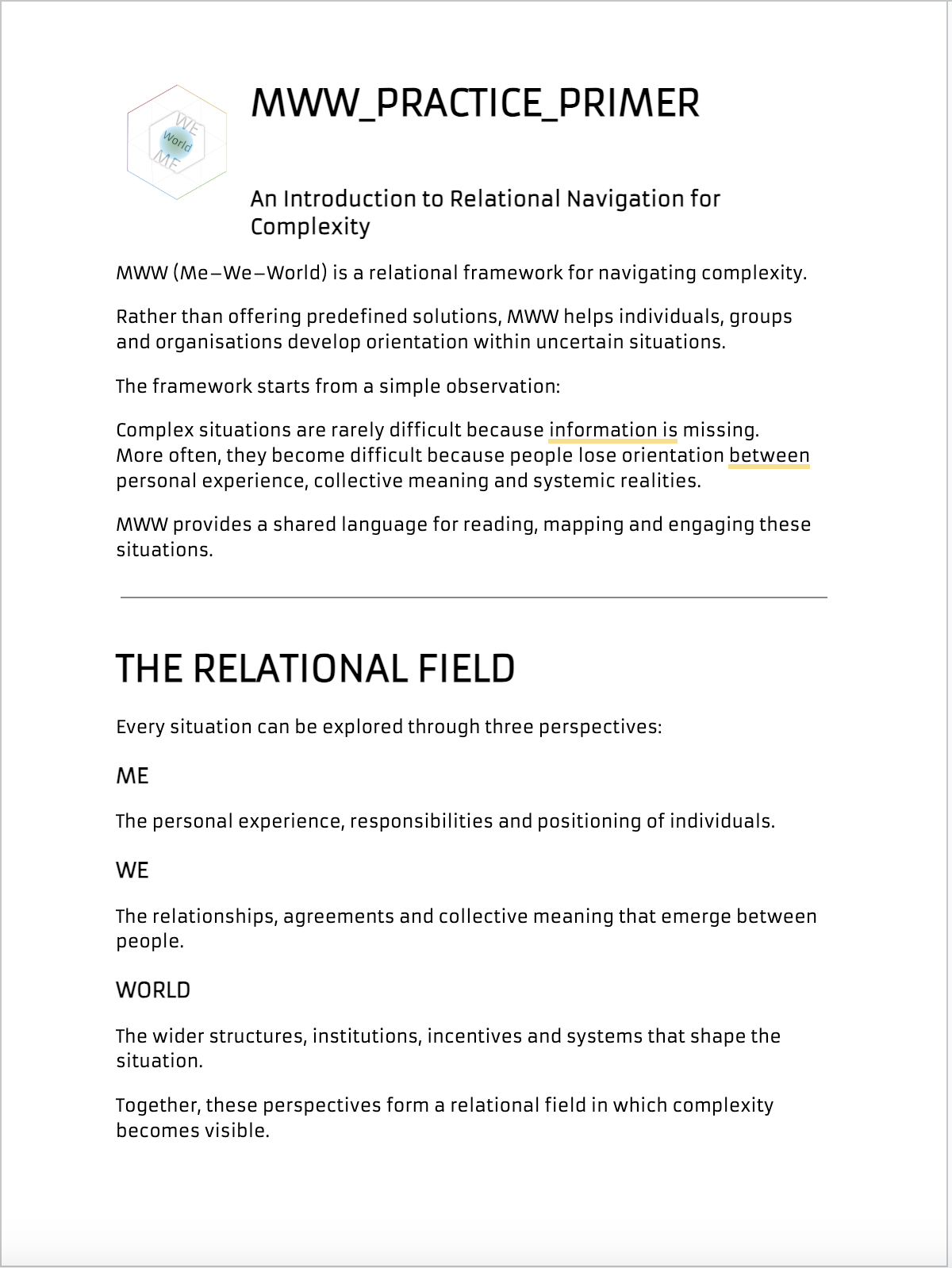
3a. MWW Practice Primer Update coming up!
Your starting point for understanding the Me–We–World framework.
This concise introduction explains the foundations of relational navigation, including C•R•A (Conditions–Relation–Action), S•T•U•A•R•T, the Double Lens and the five MWW navigation routes.
Designed as an entry point to the broader MWW ecosystem, the primer helps readers understand how relational reading, governance, systems thinking, and transformation connect within a single framework.
Start here — Download the Practice Primer
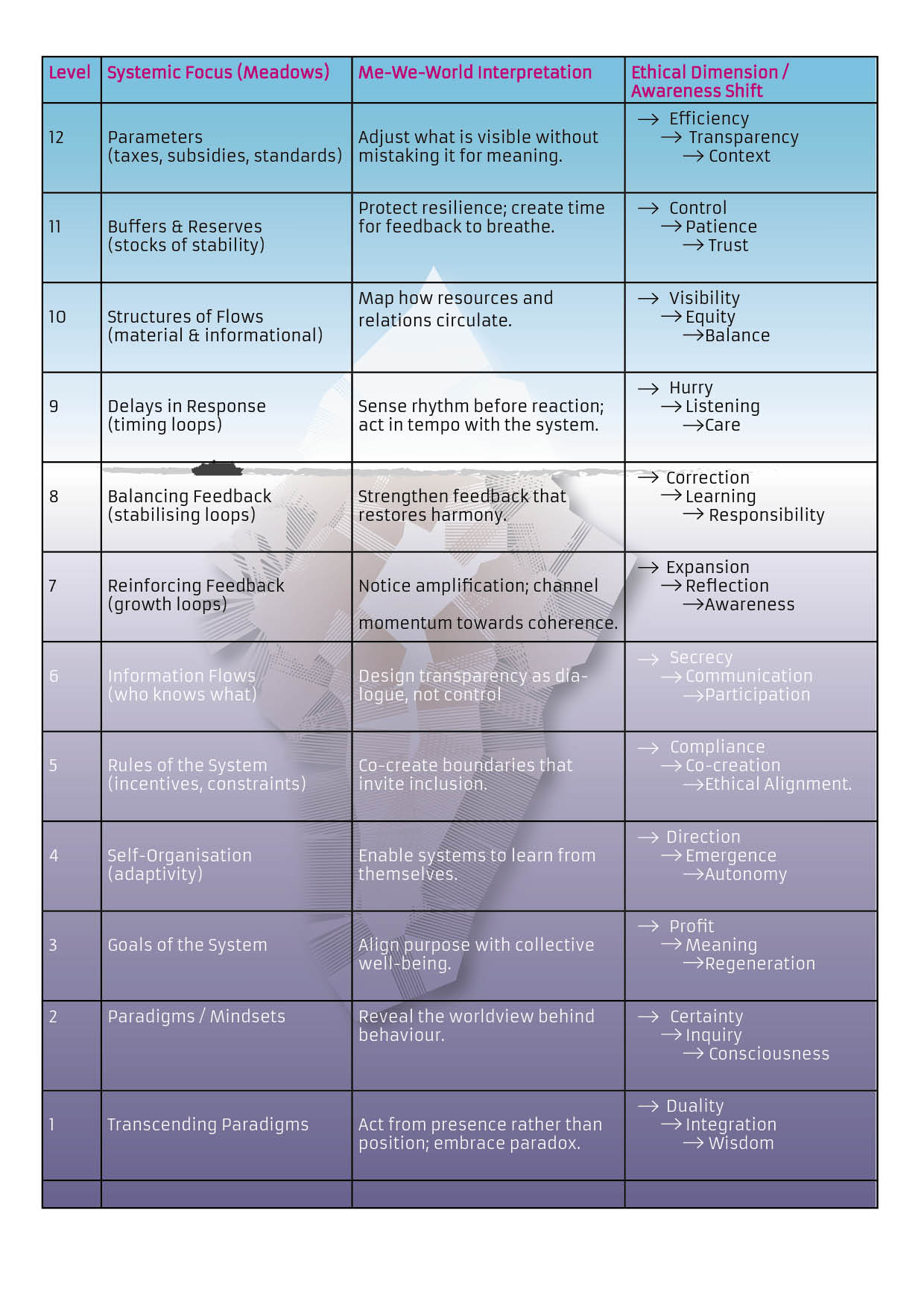
3b MEADOWS × MWW INTERPRETATION–Document
A relational reinterpretation of Meadows’ leverage points across Me, We, and World.
This matrix reveals how systemic intervention becomes ethical awareness, and how awareness becomes the capacity to act with care.
Download the 4-page PDF
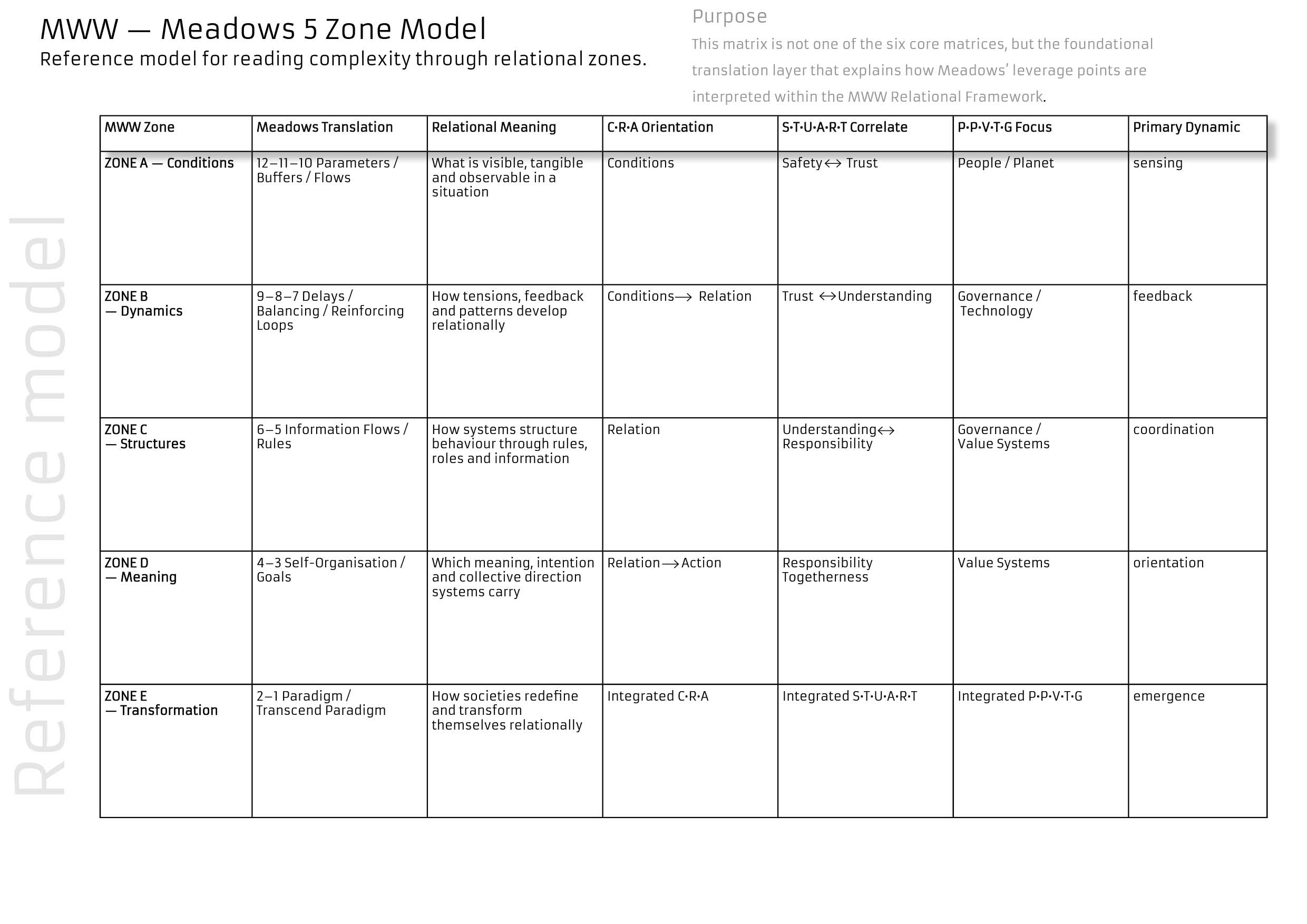
MWW — Meadows 5 Zone Model
A reference model for reading complexity through relational zones.
This matrix translates Meadows’ leverage points into five navigational zones used throughout the MWW framework.
It provides a shared language for connecting:
- systemic conditions
- feedback dynamics
- governance structures
- collective meaning
- transformational change
The model functions as a bridge between Meadows, CRA, STUART, PPVTG and the MWW Navigation Routes.
Download the 1-page PDF
3 c. The MWW Method Note
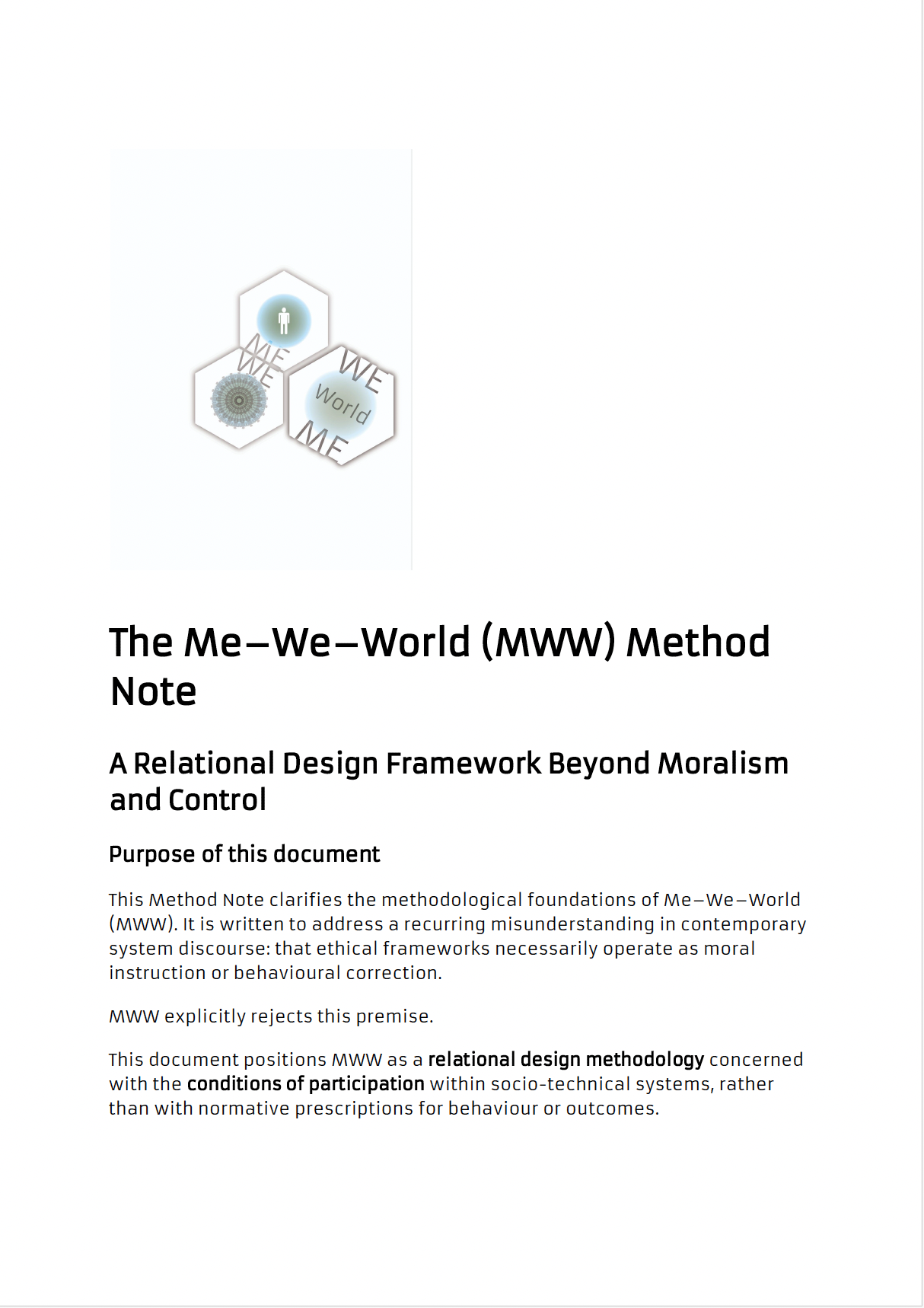
A Relational Design Framework Beyond Moralism and Control
What this document offers
This Method Note articulates the philosophical and methodological foundations of Me–We–World. It clarifies a frequent misunderstanding in contemporary system discourse: that ethics necessarily operates as moral instruction or behavioural correction.
The text positions MWW as a relational design methodology, focused on the conditions under which human participation remains possible within socio-technical systems shaped by hierarchy, technology and constraint.
This publication is intended for:
-
system architects and designers
-
researchers and theorists
-
policy thinkers and practitioners
-
artists and cultural practitioners working with complexity
Download the Method Note
to explore how ethics can function as a design condition rather than a moral demand.
MWW Navigation Matrices
Many approaches to change focus on intervention.
The MWW Navigation Matrices focus first on orientation.
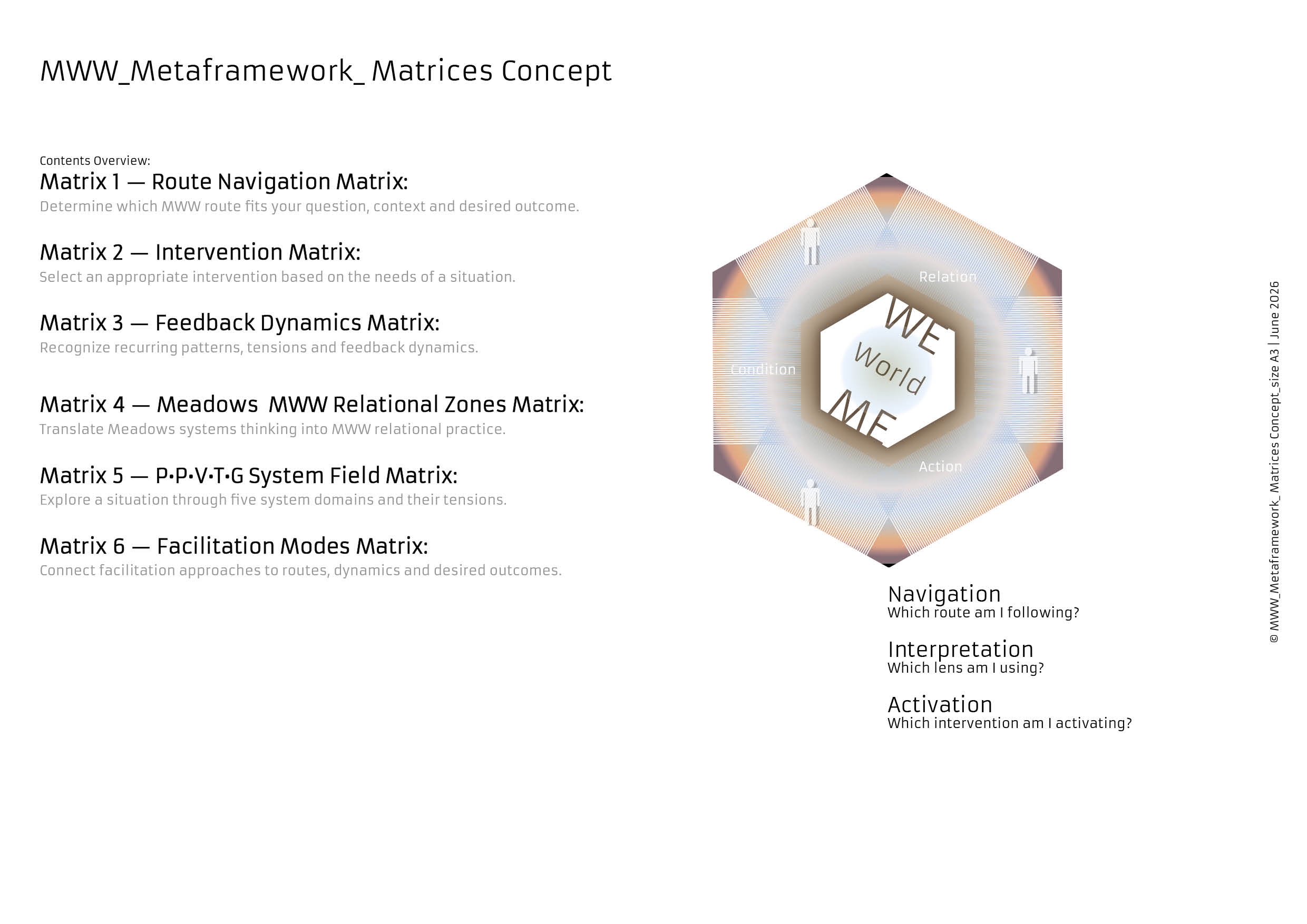
They provide a practical navigation architecture for exploring how situations are being read before deciding how they should be changed.
The matrix set connects the core components of the Me–We–World Navigation Ecology:
- Conditions • Relations • Actions
- STUART
- PPVTG lenses
- Feedback dynamics
- Meadows system zones
- Navigation routes
- Intervention pathways
- Facilitation modes
Together they help practitioners move between perspectives, scales and forms of participation while navigating complexity.
Designed for facilitators, community builders, educators, governance practitioners and systems thinkers.
Download the complete matrix set and discover how Relational Reading becomes a practical navigation practice.
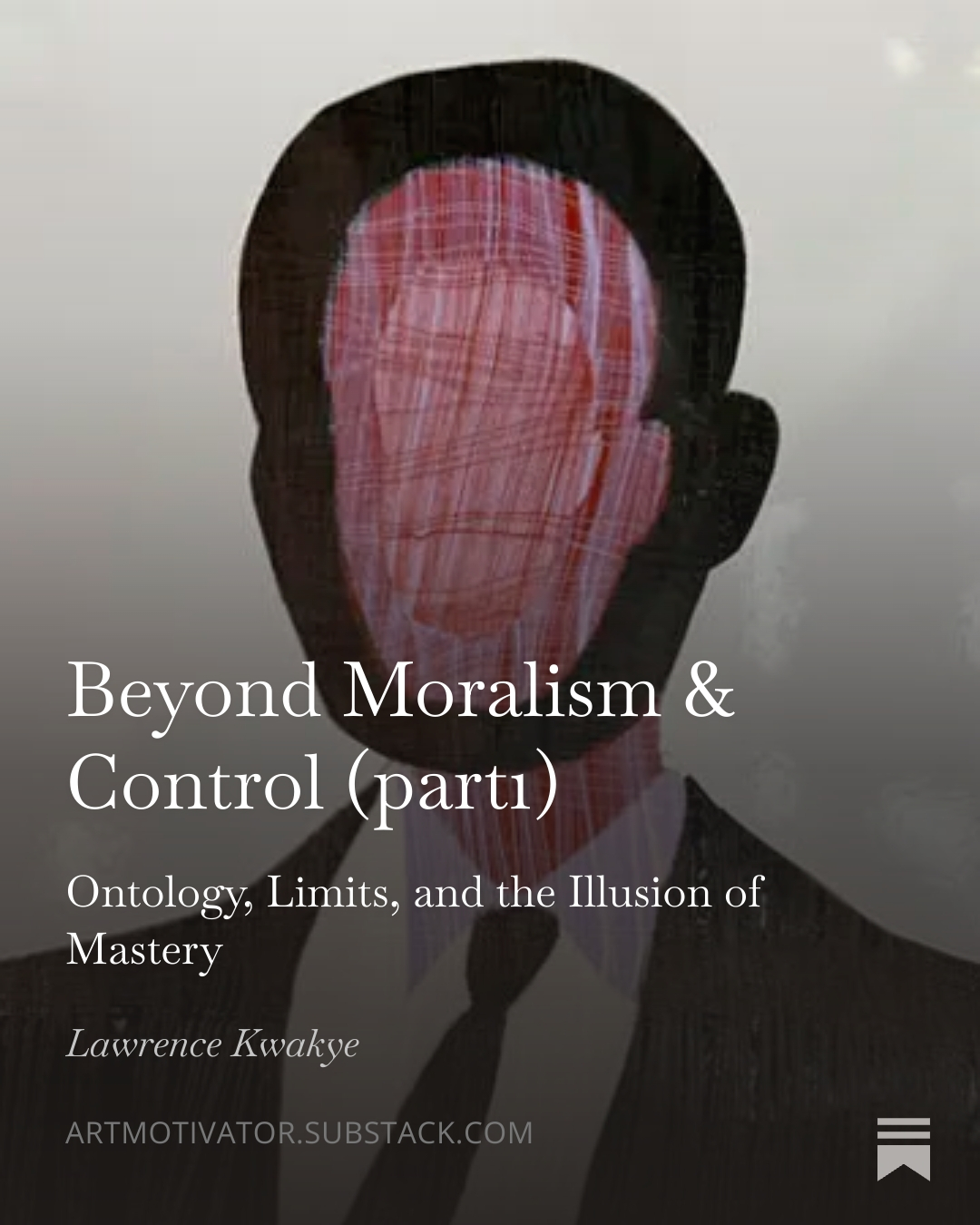
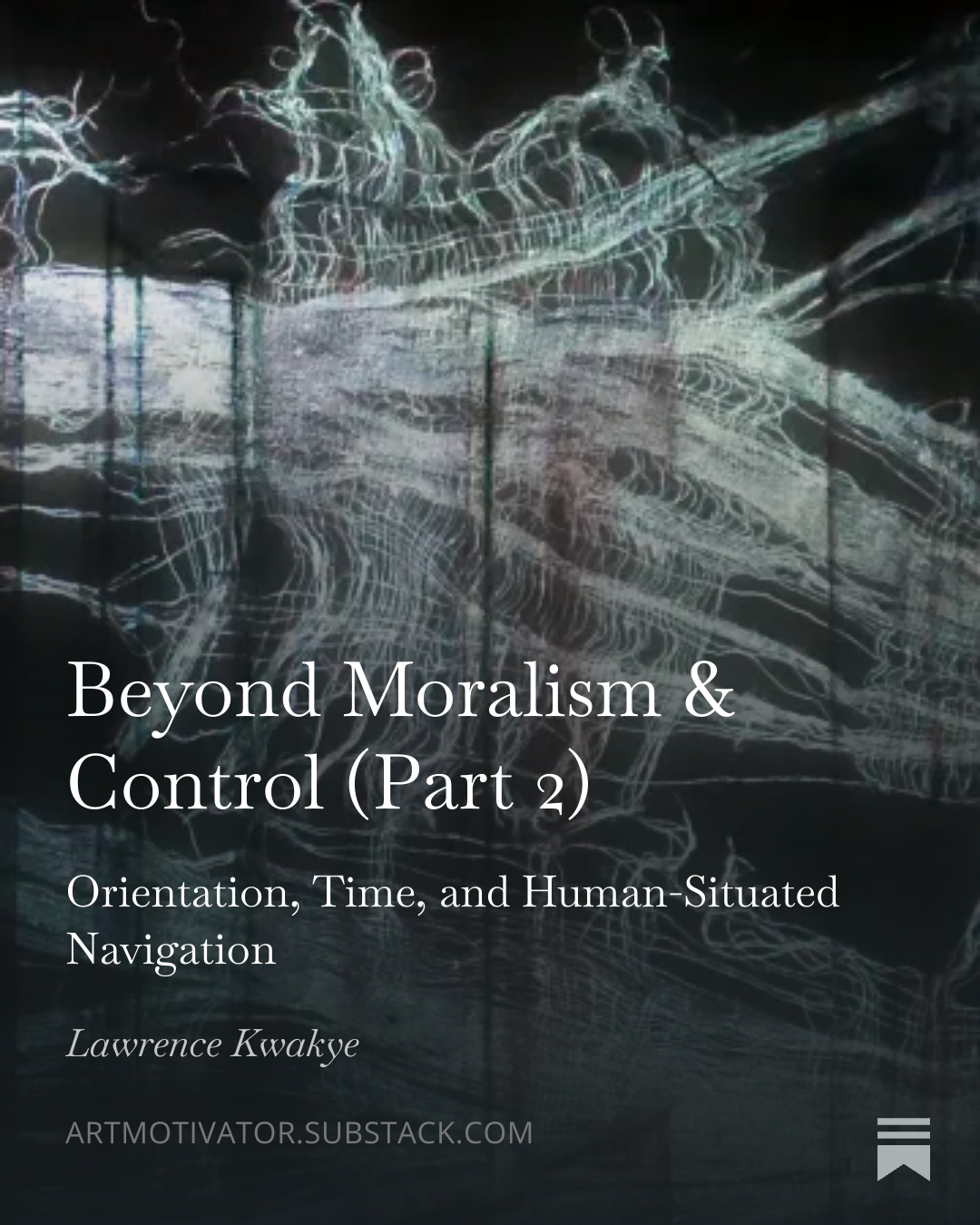
3e. Beyond Moralism & Control
A two-part essay
Beyond Moralism & Control explores why moral appeals and system control so often intensify rather than resolve systemic problems.
The essays examine how ethical pressure is frequently asked to compensate for ontological blind spots in system design — and what becomes visible when time, relationality, and human situatedness are taken seriously.
This work is offered as an orientation, not as a framework or prescription.
Available formats:
-
Download the PDF edition
(combined Part I & II, suitable for offline reading and reference) -
Read the original essays on Substack:
– Beyond Moralism & Control — Part I
– Beyond Moralism & Control — Part II
3f. Navigating Incomplete Knowledge
On system architecture, iteration, and human situatedness
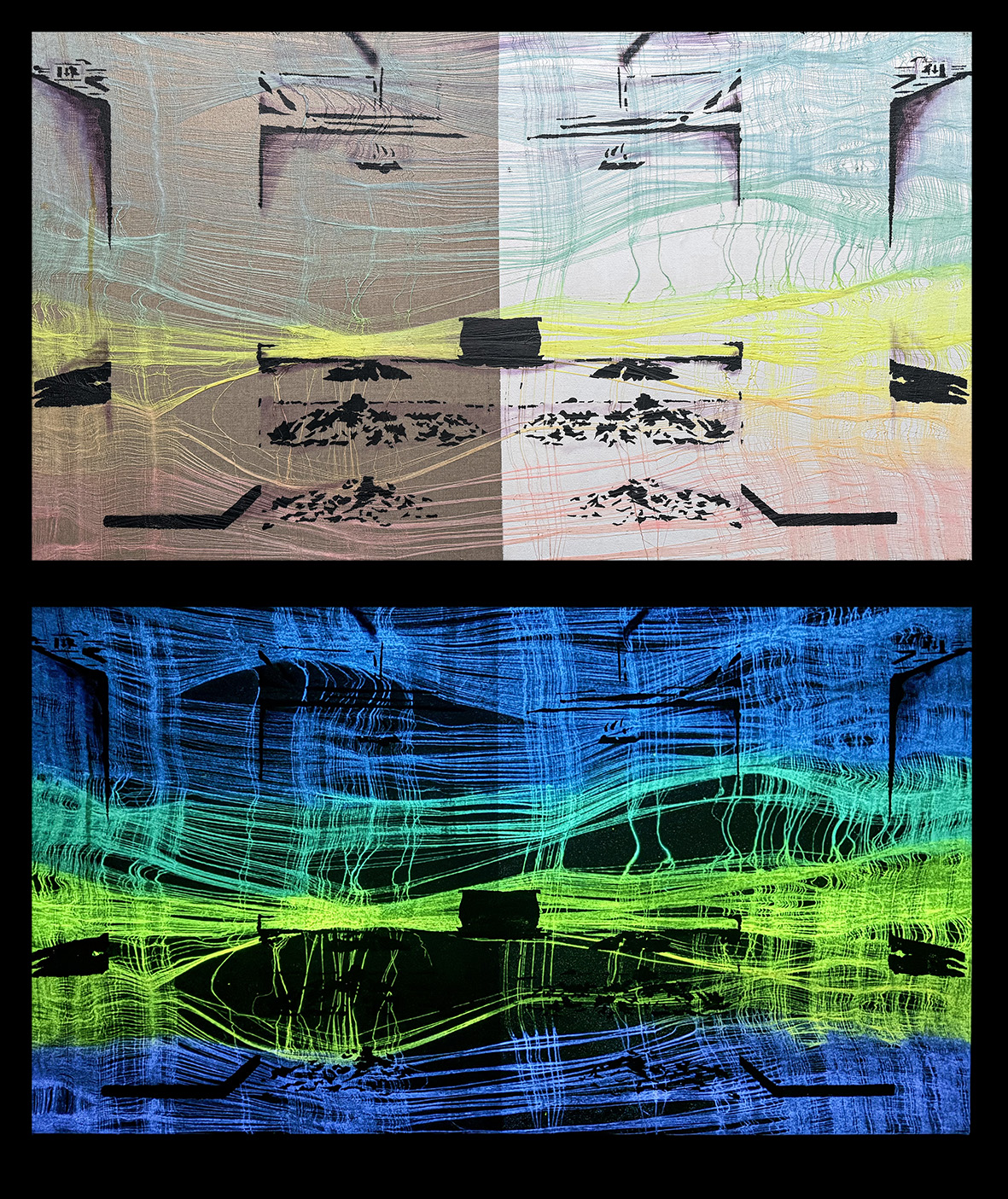
In complex systems, we design structures to create clarity, accountability, and trust. Yet every system can only evaluate what it has defined in advance. What lies outside the frame remains invisible — not because it does not exist, but because the system does not know it.
This essay explores the structural limits of system design, the role of iteration, and why uncertainty cannot be fully engineered away. Drawing on governance models, blockchain architecture, and relational thinking, it argues that human situatedness is not a human-centric claim, but an epistemic condition we cannot escape.
Rather than seeking total control, we may need to learn how to design with the awareness that something always remains unknowable.
Download the full essay (PDF)
Navigating Incomplete Knowledge
4. Articles — The Reflections
A growing series of essays applying the Me-We-World lens to society, technology, culture and governance.
The Articles explore a wide range of contemporary issues through the MWW perspective—
from value and responsibility to digital identity, collective trust, ecological ethics, organisational life, and emerging social challenges.
As this collection grows, it forms the foundation of a broader MWW literacy:
a way of thinking and sensing that helps individuals and communities recognise patterns, navigate tensions, and cultivate relational intelligence across diverse contexts.
Each article aims to make MWW thinking accessible, practical and widely applicable.
Explore the Articles below↓
-
Beyond Basic Income_ Redefining Value for Human Flourishing
-
Beyond Verification_ Why Standards Need Consciousness
-
Boundaries, Freedom and the Architecture of Trust
• Europese Digitale Identiteit – Een Ethische Reflectie op Vertrouwen, Veiligheid en Autonomie
-
Transparantie
-
Living Knowledge Manifesto
-
Should Law Follow Ethics — or Ethics Follow the Law?
5. Research — Fieldwork & Evaluations
Applied studies that test, refine and expand Me-We-World in real-world settings.
The Research section gathers evaluations, fieldwork, and collaborative studies conducted in organisations, events, communities and systemic transition environments.
These projects demonstrate how MWW concepts become lived practice, revealing insights into embodiment, governance, ethics, learning ecosystems, and the dynamics of collective action.
As new research emerges, this library will continue to evolve as a foundation for educators, policymakers, and practitioners who seek to deepen their understanding of the MWW approach and contribute to its ongoing development.
Explore the Rersearch below↓
-
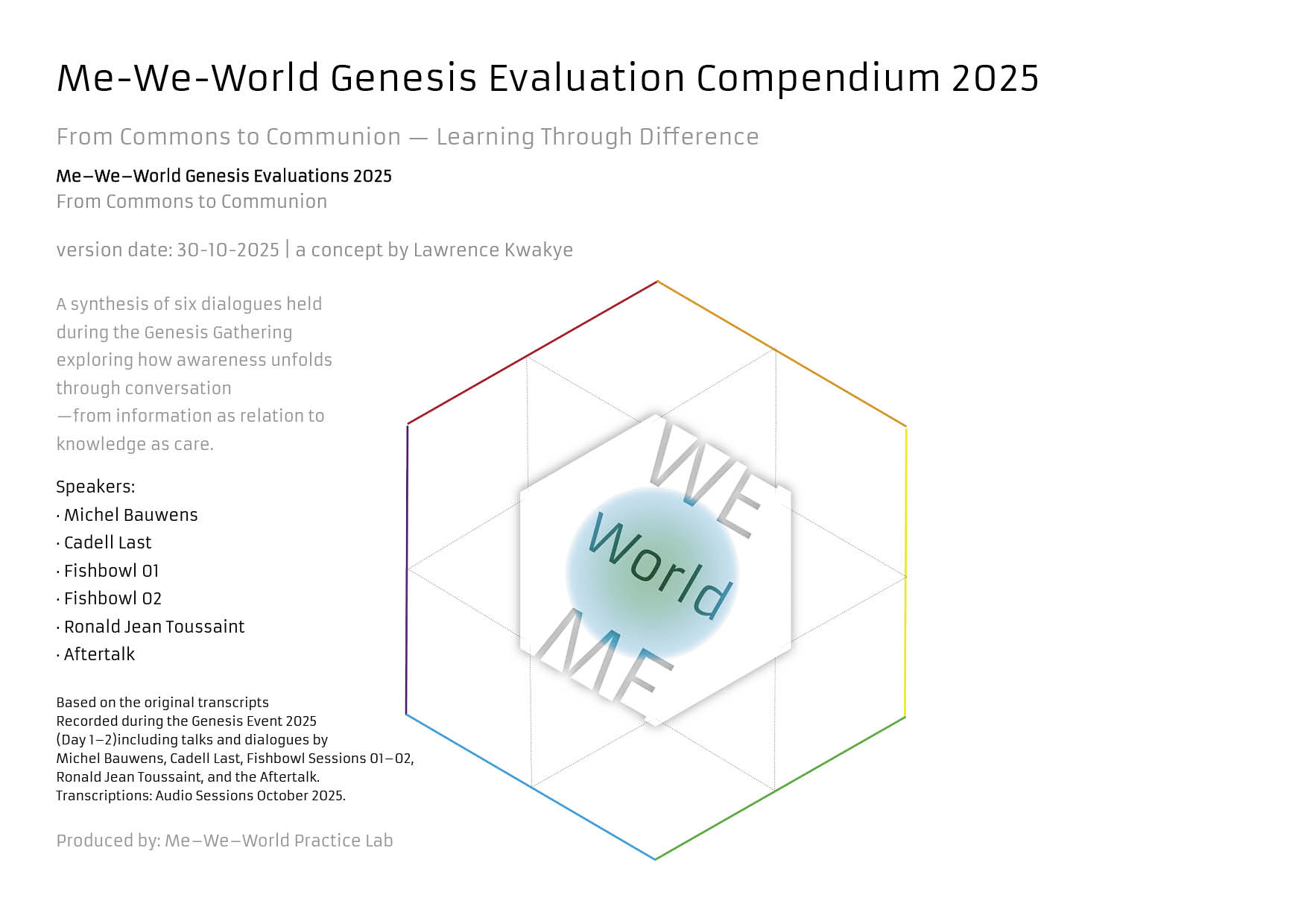
MWW_Genesis_Evaluation_Compendium _2025
6. Reading Library
MWW Reading — The Practice in Action
Situational analyses across Me, We and World.
MWW Readings are applied explorations of real situations viewed through the Me-We-World lens and the Double Lens of Law ↔ Ethics.
Each Reading examines a concrete tension, challenge or question by bringing together:
- Human Conditions (Awareness)
- Human Perspectives (Relation)
- Human Actions (Action)
- STUART as an ethical orientation
- Systemic architecture and incentives
Readings make complexity visible.
They show how personal experience, collective dynamics and systemic structures interact — and how meaning, responsibility and future possibilities emerge from that interaction.
The first Reading series focuses on District Heating and the governance of energy transitions.
Future Readings will explore a wide range of societal, organisational and technological domains, contributing to the development of a broader MWW literacy:
a way of understanding and navigating the layered reality of our time.
Each Reading is both a lens and an invitation,
to see deeper, to relate differently, and to act with greater awareness.
District Heating (Reading is in n Dutch only)
-
MWW_Stadsverwarminig–Van Incentives naar Intention
-
MWW_Reading_Stadsverwarminig–Accountability #4
-
MWW_Reading_Stadsverwarminig–Interoperability #5
-
MWW_Reading_Stadsverwarminig–System Analysist #6
-
MWW_Reading_Stadsverwarminig–Visual Management #7
-
MWW_Reading_Stadsverwarminig–IP Management #8
-
MWW_Reading_Stadsverwarminig–Life Cycle_Management #9
-
MWW_Reading_Stadsverwarminig– Slotartikel#10